Market Insights GCC | A Deep Look into the Construction Market in the Gulf
 February 21, 2026
Table of Contents
Introduction: Why the GCC Construction Market Matters
The Gulf Cooperation Council (GCC) construction market stands as one of the most dynamic and opportunity-rich sectors globally. Driven by ambitious national visions, large-scale urban developments, infrastructure expansion, and private sector growth, the GCC continues to attract contractors, investors, suppliers, and service providers from around the world.
Countries such as Saudi Arabia and the United Arab Emirates are not only investing heavily in construction—they are reshaping entire cities, industries, and ways of living. However, while opportunities are vast, the market remains complex, competitive, and often difficult to navigate without the right insights.
This article provides a clear and practical overview of the GCC construction market, highlighting where growth is happening, what challenges exist, and how businesses can position themselves to succeed.
The Scale of the GCC Construction Market
The GCC construction market is valued at hundreds of billions of dollars annually, with Saudi Arabia and the UAE accounting for the largest share. Mega-projects, smart cities, tourism developments, logistics hubs, and residential communities continue to fuel demand across the region.
Key growth drivers include:
* Vision 2030 initiatives in Saudi Arabia
* Urban expansion and real estate development in the UAE
* Infrastructure and transport projects across the Gulf
* Increased private sector participation
* Foreign investment and international partnerships
This scale creates consistent demand for contractors, consultants, suppliers, workforce providers, and project management firms.
Where the Opportunities Are
Not all construction segments grow at the same pace. The most active sectors in the GCC include:
1. Real Estate & Mixed-Use Developments
Residential, commercial, and mixed-use projects continue to dominate demand, especially in major cities such as Riyadh, Jeddah, Dubai, and Abu Dhabi.
2. Infrastructure & Transportation
Roads, bridges, rail networks, ports, and airports remain top priorities as governments support economic diversification and population growth.
3. Energy & Industrial Projects
Renewable energy, power plants, industrial zones, and logistics facilities are expanding rapidly, creating long-term opportunities for specialized contractors.
4. Hospitality & Tourism
Hotels, resorts, entertainment destinations, and cultural projects are increasing as the region positions itself as a global tourism hub.
Market Challenges: Why Access Is Not Easy
Despite the size of the market, many companies struggle to secure projects. Common challenges include:
* Fragmentation: The market is highly fragmented, with disconnected players across the value chain.
* Heavy reliance on intermediaries: Middlemen and brokers often control access to projects, increasing costs and reducing transparency.
* Limited visibility: Smaller and mid-sized companies find it difficult to reach real decision-makers.
* Trust issues: Verifying companies, workers, and suppliers remains a challenge.
* Slow processes: Traditional sourcing, hiring, and procurement methods are time-consuming.
As a result, opportunities exist—but reaching them efficiently is often harder than executing the work itself.
The Shift Toward Organized Digital Markets
The GCC construction sector is gradually shifting toward more organized and digital models. While personal relationships remain important, decision-makers increasingly value:
* Faster access to verified companies
* Transparent pricing and offers
* Organized project listings
* Centralized communication
* Reduced dependency on intermediaries
Digital B2B platforms are beginning to play a critical role in bridging gaps between project owners, contractors, consultants, suppliers, and workers.
What This Means for Businesses
For companies operating in or entering the GCC construction market, success depends on more than technical capability. Key success factors include:
* Understanding where demand is growing
* Building visibility beyond traditional networks
* Establishing trust and credibility
* Reducing operational friction
* Adopting organized, scalable market access tools
Those who adapt early gain a competitive advantage in accessing projects, partnerships, and long-term growth.
Looking Ahead: The Future of Construction in the GCC
The future of the GCC construction market is moving toward:
* Better market organization
* Smarter project matching
* Transparent collaboration
* Faster hiring and procurement
* Stronger trust mechanisms
As the market evolves, platforms and systems that simplify access, reduce cost, and improve transparency will become essential—not optional.
Final Thought
The GCC construction market offers unmatched opportunity, but navigating it requires insight, structure, and the right connections. Understanding the market is the first step. Organizing access is the next.
Market insights are no longer a luxury—they are a necessity for growth.
Related Articles
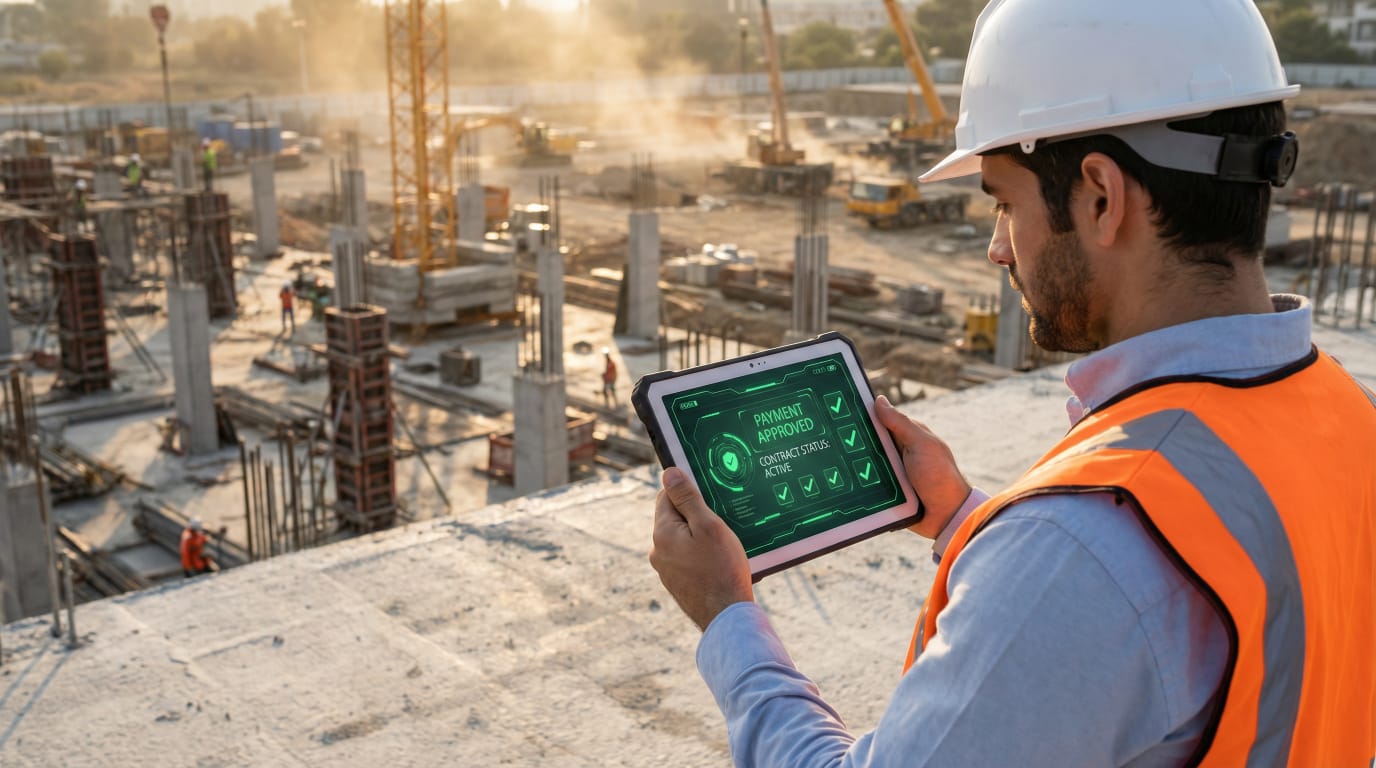
How Technology Is Reshaping the Future of the Industry

From Traditional Trust to Digital Trust
For decades, the construction sector has relied on personal relationships, paper contracts, and manual processes.
However, as projects g
Construction & Blockchain
GCC Construction | How to Win More Construction Projects in the Gulf (GCC) Market
Introduction: Gulf Market Opportunity
The construction market in the Gulf Cooperation Council (GCC) countries is one of the fastest-growing markets in the world, dri
GCC Construction