How Technology Is Reshaping the Future of the Industry
 February 21, 2026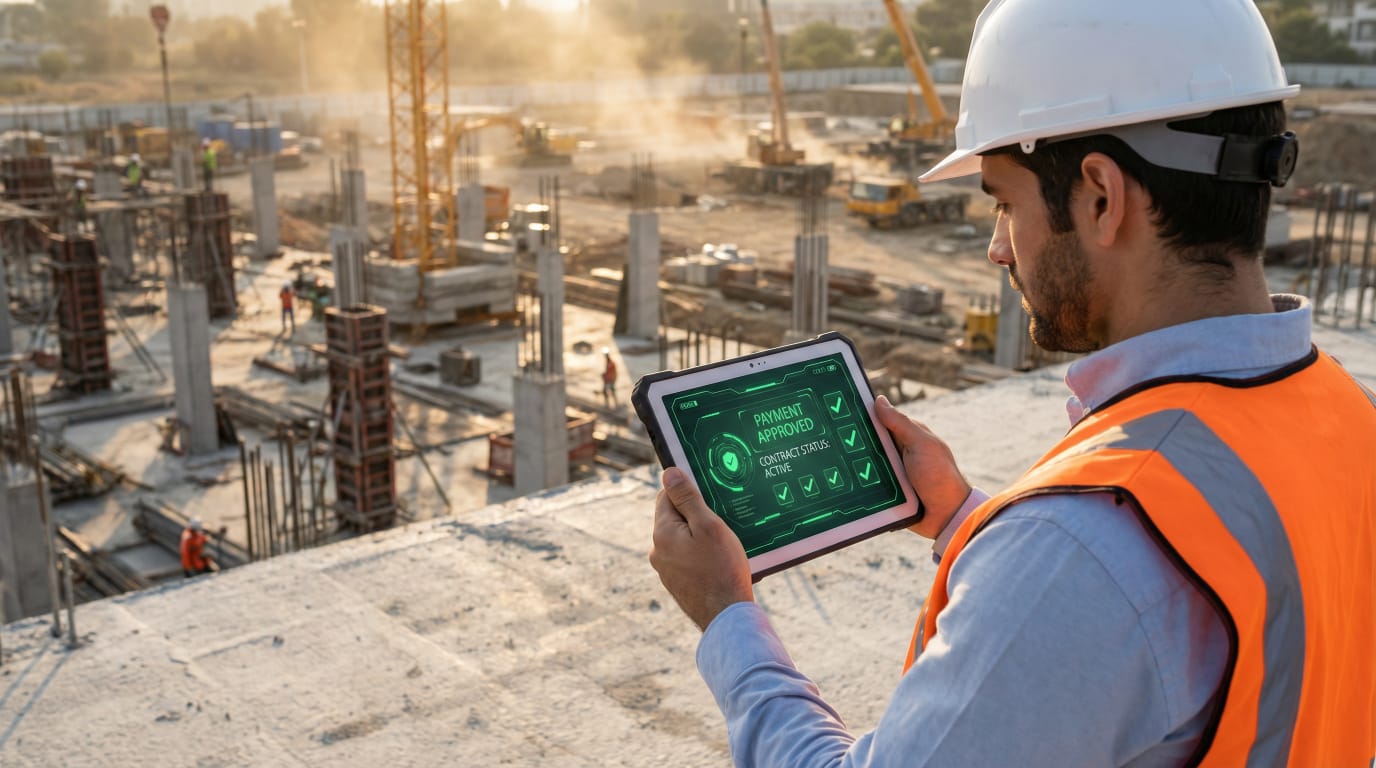
Table of Contents
From Traditional Trust to Digital Trust
For decades, the construction sector has relied on personal relationships, paper contracts, and manual processes.
However, as projects grow larger, timelines become tighter, and more stakeholders get involved, these traditional methods are no longer enough.
This is where blockchain enters the construction industry—not as a buzzword, but as a practical solution for trust, transparency, and efficiency.
Key Challenges in Today’s Construction Sector
Across the GCC and global markets, construction stakeholders face recurring challenges, including:
* Lack of transparency in contracts and payments
* Delays in settlements and cash flow
* Difficulty tracking project milestones
* Disputes caused by unclear agreements
* Heavy reliance on intermediaries and brokers
These issues impact project owners, contractors, suppliers, and workers alike.
What Role Does Blockchain Play in Construction?
Blockchain is not just a payment technology.
It is a digital trust infrastructure that enables:
* Tamper-proof data records
* Transparent transaction history
* Automated execution of agreements
* Reduced disputes and fraud
In construction, this translates into greater accountability and clarity across every stage of a project.
Smart Contracts: The Core of Construction Transformation
One of the most powerful blockchain applications in construction is smart contracts.
A smart contract is a digital agreement that:
* Executes automatically
* Links project progress to payments
* Removes the need for intermediaries
Example:
Once a verified milestone is completed, the payment is automatically released.
This model:
* Protects all parties
* Reduces delays
* Improves compliance and commitment
Transparency in Construction Supply Chains
The construction materials market often suffers from:
* Price inconsistencies
* Limited supplier verification
* Delivery delays
With blockchain, platforms can:
* Track material origin and movement
* Record supplier transactions transparently
* Reduce price manipulation
* Build fairer, more efficient material marketplaces
Blockchain and Workforce Management
Blockchain can also support labor management by:
* Verifying worker credentials
* Recording work history
* Ensuring transparent wage payments
This creates:
* Fairer employment systems
* Higher trust between companies and workers
* Fewer labor disputes
Is Blockchain Ready for Full Adoption?
The reality is that blockchain adoption must be gradual and purposeful.
The market does not need blockchain everywhere—it needs it where it creates real value.
A smart approach includes:
1. Digitizing and organizing the construction market
2. Building trust through transparent systems
3. Activating blockchain for:
* Contracts
* Escrow payments
* Secure records
The Future of Construction in the GCC
With mega-projects, long-term visions, and rapid urban development, the GCC construction sector is moving toward:
* Digital-first platforms
* Reduced paperwork
* Higher efficiency and transparency
* More sustainable partnerships
Blockchain will play a critical role in enabling this transformation.
Conclusion
Blockchain is not a distant technology—it is a practical tool for building a faster, fairer, and more transparent construction industry.
The future of construction is not just about building structures.
It is about building trust.
Related Articles

Market Insights GCC | A Deep Look into the Construction Market in the Gulf

Introduction: Why the GCC Construction Market Matters
The Gulf Cooperation Council (GCC) construction market stands as one of the most dynamic and opportunity-rich sectors globally.
Market Insights GCC
GCC Construction | How to Win More Construction Projects in the Gulf (GCC) Market
Introduction: Gulf Market Opportunity
The construction market in the Gulf Cooperation Council (GCC) countries is one of the fastest-growing markets in the world, dri
GCC Construction